 This is the third in a series of posts about losing weight on the bike. Throughout this discussion it’s important to keep in mind that eating has many consequences for health, athletic performance and weight loss. The “best” diet for losing weight is unlikely to be the “best” diet for maintaining either your health or a high level of athletic performance.
In the first post in the series, Riding the Bike to Lose Weight, we pointed out the fundamental and most important fact about weight loss. If you burn more calories than you ingest during a day, you will lose weight. We also said that given this basic fact, if you focus your attention on deriving more enjoyment out of riding the bike, you are likely to lose weight without worrying about losing weight all the time. You’ll be thinking about something you enjoy, the more you enjoy it, the more you’re likely to do it, and the more you do it, the more calories you’ll burn while you’re doing it. All this goodness without any time spent being anxious about your weight.
In the second post in the series, Metabolic Homeostasis, we pointed out that the human body is an exquisitely functioning homeostatic system. The system will adapt to changing conditions such as an increase in calories burned through exercise or a decrease in calories ingested through dieting in order to maintain a balance between caloric intake and caloric burn. For this reason we recommended that you should always strive to increase the level or intensity of your riding. Go harder, faster, longer, stronger and you will increase the caloric burn. It is hard for the system to reach a balance point if the caloric burn is always increasing.
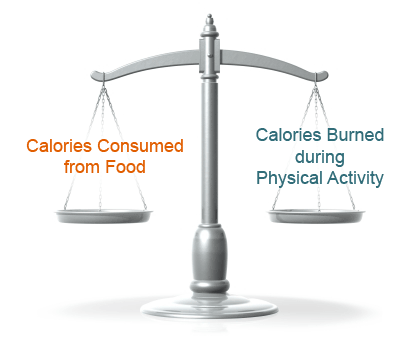 The recommendations from the previous two posts in the series work hand-in-hand. If you continue to find new ways to get more enjoyment from the bike, you’re likely to continue to increase the time and energy you spend on the bike, and thereby increase the calories burned by cycling which makes it difficult for the system to adapt to a new and sustained level of caloric burn.
In the post on Metabolic Homeostasis we also talked about how reducing caloric intake by dieting leads to an adjustment in the basal metabolic rate in such a way that the same amount of work can be done to accomplish routine daily activities while burning fewer calories. When caloric intake is reduced, the system seeks balance by reducing the calories it needs.
When we look at the other side of the weight loss equation, caloric burn, how does the system respond when balance is disrupted by burning more calories through exercise? One way the system adapts is by increasing the demand for food. Exercise makes you hungry.
The mechanisms that regulate metabolic homeostasis are complex and not fully understood. One of the factors involved is a hormone called ghrelin. One variant of this hormone, called acyl ghrelin or acylated ghrelin, plays an important role in regulating hunger. When levels of acylated ghrelin in the bloodstream are high you feel the sensation of hunger and want to eat. After eating, levels of acylated ghrelin in the bloodstream drop.
Burning calories through exercise disrupts the balance between caloric intake and caloric burn by increasing caloric burn. One way in which the body responds is by increasing the level of acylated ghrelin in the bloodstream. This makes you feel hungry and want to eat. The system attempts to return to a balance between caloric intake and burn after exercise by increasing caloric intake.
 The release of acylated ghrelin after exercise leading to feelings of hunger and the desire to eat does not affect everyone equally. Most women experience this effect but many men do not. In some cases a prolonged session (e.g., 90 minutes) of fairly intense exercise can reduce the level of acylated ghrelin in the bloodstream for some men. Anecdotally, we have observed this difference in our family. After a fairly long and intense ride my wife is often hungry and wants to eat while I have no interest in food for several hours after the ride is finished.
The emerging understanding about how exercise is related to weight loss has led some “experts” to make statements like “exercise is practically useless for losing weight”. Statements like this are usually designed to draw attention by grabbing headlines or serving as a sound bite. When you dig a little deeper you find that the reasoning behind the statement is that after exercise people often feel hungry and they ingest enough calories to offset the calories they just burned during exercise.
Well, duh.
 If you pork out on pizza and beer after your ride, you’re probably going to ingest more calories than you burned and you’re not going to lose weight. This doesn’t mean exercise is useless, it means you have to use some common sense after exercise and not replace all the calories you just burned.
It seems to me that a sensible way to think about the relationship between losing weight and cycling or any other form of exercise is to always keep the basic tenet in mind that you lose weight when you ingest fewer calories than you burn. Gain knowledge about factors that affect this simple relationship such as metabolic homeostasis, and the mechanisms the body uses to maintain the homeostatic balance between caloric intake and caloric burn such as increasing the levels of acylated ghrelin in the bloodstream and decreasing basal metabolic rate. Make use of this knowledge when making decisions about when and how to ride and when and what to eat. Eat to fully support your ride so you will burn as many calories as you can while you’re on the bike. Enjoy your ride – this is the most important part – enjoy your ride. Discipline yourself after the ride so you don’t replace all of the calories you just burned. If the net outcome is that you burn more calories than you ingest, you’ll lose weight.
 Tuned In To Cycling