More information about hydration can be found in Nutrition for Cyclists: Eating and Drinking Before, During and After the Ride which can be purchased on Amazon.com. For information about the book and how it relates to what I’ve posted to Tuned In To Cycling, please check out this post.
It’s hot. It’s humid. Even worse, it’s hot and humid. How do you handle heat and humidity on a ride? You already know the answer. Hydrate. Is there anything else you can do? Yes, but hydration is far and away the most important thing you need to combat heat and humidity. Understanding how heat and humidity affects you when you’re riding (or engaging in any other kind of exercise) can help you counter their ill effects.
How the body keeps cool
“Normal” body temperature is a slippery concept because many factors such as the time of the day, how temperature is measured, your state of athletic training, and where you are in your menstrual cycle if you are a woman (among other things) affects body temperature. For most cycling purposes, exact measures of normal body temperature along with exact measures of safe increases in body temperature aren’t very useful. You’re not going to know what your body temperature is while you’re riding because you’re not going to be taking rectal temperature measurements while you’re on the bike. Also, it doesn’t really matter what constitutes a “safe” increase in body temperature because you are going to be stressing your body’s ability to maintain that safe level when you ride.
The human body is a homeostatic system. This means it adapts to changing environmental circumstances in order to maintain certain physical and physiological parameters within acceptable boundaries. One of the most important of these parameters is core temperature. Combating heat and humidity is mainly about keeping core temperature down.
 Our bicycles are extraordinarily efficient machines. Under optimal circumstances approximately 99% of the energy put into the pedals is transferred into forward motion; only 1% is lost. Unfortunately, our bodies are not nearly as efficient. Approximately 75% of the energy generated by physical activity is lost as heat. The heat generated by our muscles raises body temperature when we exercise. The harder you go, the more heat you make and the more stress you place on your body to shed that heat and keep core temp down.
There are two main ways the human body sheds heat. When the temperature of the body is higher than the temperature of the surrounding environment heat is shed through conduction and radiation. Here’s how this works for the cyclist. Your working muscles generate a lot of heat. Much of this heat is transferred to the blood which carries it away from the working muscles. When blood temperature reaches a particular threshold, vasodilation (expansion of the blood vessels at the surface of the body) occurs which brings a larger proportion of the blood into close contact with the surface of the body where it can shed its heat to the surrounding environment. When you stand close to a person who has been exercising hard you can feel the heat coming off their body. That’s heat that has been shed through conduction and radiation.
Conduction and radiation can only reduce body heat if the surrounding environment is at a lower temperature than the body. If air temperature is higher than body temperature, the body takes on heat from the environment. If you are riding on a hot day, conduction and radiation aren’t going to be nearly sufficient to shed the heat you’re generating.
The second way the body sheds heat is through evaporative cooling. When core temp rises to a critical threshold, the sweat glands are triggered and sweat is produced on the surface of the skin. The sweat evaporates and the evaporation cools the body. Under most circumstances, and especially when it is hot outside, evaporative cooling is the main way the cyclist sheds heat.
How increased core temp can hurt you
When you exercise your core temp rises. When core temp rises you sweat. When you sweat you lose fluid. If you lose enough fluid you become dehydrated. Dehydration and overhydration are important issues for the cyclist that are taken up in the post Dehydration and Over Hydration (Hyponatremia) for the Cyclist.
Even low levels of dehydration can affect performance. Loss of 2% body weight through fluid loss has measurable negative effects on athletic performance. Holding fluid loss constant, the negative effects increase the longer you ride or the hotter it is when you ride. As fluid loss increases beyond 2% body weight., the negative effects of dehydration increases rapidly and markedly. This is the good news.
The bad news is that loss of body fluids can produce severe dehydration and heatstroke. The symptoms include headache, nausea and vomiting, sweating stops or is severely reduced, very rapid breathing and heart rate, confusion, delirium, loss of consciousness, death. Heatstroke is a life threatening medical emergency. In a lifetime of athletic activity that has produced broken bones, snapped tendons, knocked out teeth, severe lacerations and several surgeries, the one time I suffered serious heatstroke (while running in competition) was – easily, hands down, no contest, and by far – the worst physical experience of my athletic life. You don’t want to go there, it’s terrible.
How all of this affects the cyclist
 Heat is bad. As the air temperature rises, the difference between body and air temperature decreases which weakens or eliminates conduction and radiation as methods of shedding heat.
Humidity is worse. Evaporative cooling is the primary way humans shed heat and it becomes even more important when exercise is producing a lot of excess heat. Humidity is an index of the amount of water vapor in the air; the higher the humidity, the more the air is saturated with water. The more the air is saturated with water, the less water it can take on which means that sweat is less likely to evaporate. The body continues to produce sweat so that evaporative cooling can bring body temperature down, but the sweat rolls off the skin rather than evaporating and cooling the body.
The air flow produced by moving on the bike can be a help here. When you stand still and sweat the air around you becomes saturated and sweating produces less evaporative cooling. When you’re rolling on the bike, the air around you is constantly being refreshed with air that is less saturated.
Heat combined with humidity is the worst of all. High heat coupled with high humidity sabotages both of the body’s mechanisms for shedding heat. The high air temperature reduces or eliminates conduction and radiation and the high humidity reduces evaporative cooling.
What can you do about it?
First and foremost – HYDRATE. Drinking water won’t cool you directly but it will replace the fluid you’re losing to sweat. This is critical for avoiding dehydration and heatstroke. Don’t screw around with this. Heatstroke can kill you.
How much should you drink? It depends on how much fluid you are losing to sweat and this will vary as a function of many factors such as how hot it is and how hard you’re working. Don’t use feeling thirsty as an indicator of whether or not you need to drink. The body is relatively slow to send thirst and hunger signals. You will usually have lost 1% to 2% of your body weight in fluid loss before you get the thirsty signal. By that time you’re already losing the battle of shedding excess body heat. A common mantra for cyclists is “Drink before you’re thirsty.” It’s great advice. Drink small amounts often rather than large amounts less frequently.
It’s possible to overhydrate which can lead to a condition called hyponatremia where there are abnormally low levels of sodium in the body (the excess water dilutes the sodium). This can also be life threatening although it rarely is. When hydrating your goal is to continually replace the fluid you lose through sweating without going to extremes with either too much water or not enough. For the cyclist riding in heat and humidity it’s better to err on the side of limiting dehydration as opposed to limiting hyponatremia. Don’t prepare for riding by drinking liters of water beforehand and be sensible on the bike. A future post will look at hyponatremia in more detail.
Wear the right clothing. No clothing at all would be optimal but sunburn, chafing from the bicycle seat and indecency laws make that impractical. If you’re not going to go nude, you want form fitting clothing that wicks moisture. Loose clothing traps air between the cloth and your skin which acts as insulation and reduces evaporative cooling. Wicking material moves the sweat from your skin to the air where it can evaporate and cool you. Cycling clothing has both of these properties so if you wear tight fitting cycling shorts and jerseys, you’re good. If you ride in a loose fitting cotton shirt, you’re asking for trouble when it’s hot and humid.
If you’re not racing, consider ramping down your work level on hot and humid days. If you ride at a slower pace, your leg muscles aren’t working as hard and are producing less excess heat.
If you have enough water, pour it on yourself. Evaporating sweat and water both produce evaporative cooling. Remember, though, that the water will do more to help you when it’s inside your body than when it’s on the outside. Don’t become dehydrated because you poured your water over your head.

 One of the saddest days of the summer: The Tour de France is over for another year. Some in the media and in online commentaries have complained that this year’s tour was boring. They tried to sell the idea that Team Sky was torn by internal competition between Bradley Wiggins and Chris Froome. They claimed that Froome humiliated Wiggins by waiting for him on the final climb on the Peyragudes. That’s not how it looked from here.
 Bradley Wiggins showed himself to be everything you would want in a team and race leader. He didn’t just ride for himself, he rode for his team. When was the last time you saw the man in the yellow jersey at the front of the entire peloton going under the 1K flag on the final lap around the Champs-Elysees leading out his team’s sprinter? Rather than ride safely in the peloton Wiggins performed the same service for Cavendish on Stage 18’s sprint finish the day before the final time trial that Wiggins needed to cement his overall victory.
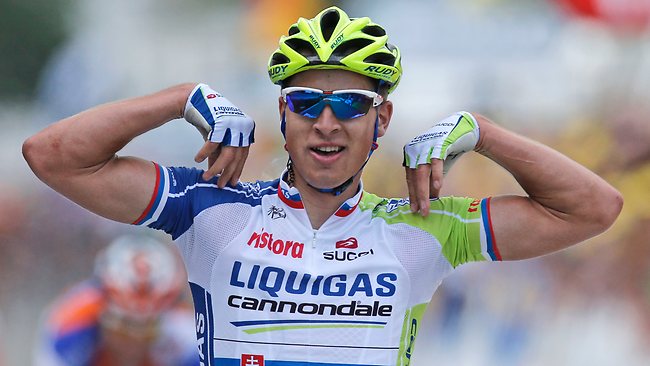 In his press comments Wiggins always praised his team. While this is the standard response riders give to the press, Wiggins appeared to mean it, unlike some others who sound like they are reciting a memorized script. Moreover, Wiggins appeared to be genuinely pleased on the road when his teammates did well. While he showed triumphant emotion at the finish of the penultimate day’s time trial when he locked up the Tour victory, he never engaged in self-conscious displays of ego or self-aggrandizement. Compare Wiggins demeanor with Thomas Voeckler’s seemingly self-absorbed “Adore Me. Worship Me” freewheel to the line in his terrific Stage 16 victory, or Peter Sagan’s self-conscious what-victory-display-should-I-do-today-to-draw-attention-to-myself behavior during the first week of the Tour.
 As for Froome, when asked about his role on the team, he appeared to answer honestly when he said he thought he had a chance to win the Tour, not taking that chance and possibly becoming the first British rider to win the Tour was a personal sacrifice, and it was a sacrifice he was going to make because he was there to ride for the team and the team was there to win the tour with Wiggins. Of much more importance, he rode the truth of what he said. Some interpreted his waiting for Wiggins on the Peyragudes as Froome humiliating Wiggins by showing the world that he was the stronger rider. What I saw was a loyal rider supporting his team leader and doing exactly what he said he was there to do. After watching him in this Tour de France, if I was putting together a professional cycling team I would take one Chris Froome over ten Frank Schlecks on the basis of personal demeanor and integrity alone.


 Tuned In To Cycling